This year’s theme — Nourishment
The theme of this year’s Annual Gathering is Nourishment.
Our wounds have broken open. Every day, we face crises in our bodies, our families, our neighborhoods, and across our planet caused by systems rooted in separateness and fragmentation. These wounds run deep. They show up as pain in layers of our tissue, fatigue at our core, anxiety and grief that seep from generation to generation. The antidote we urgently need is nourishment.
Our wounds have broken open. Every day, we face crises in our bodies, our families, our neighborhoods, and across our planet caused by systems rooted in separateness and fragmentation. These wounds run deep. They show up as pain in layers of our tissue, fatigue at our core, anxiety and grief that seep from generation to generation. The antidote we urgently need is nourishment.
Across ancestral traditions, nourishment and healing were often one. In times of grief, birth recovery, and all major life transitions, nutrient demands rise while digestion slows. Nourishment during these times is of utmost importance.
Our movement exists because we believe that healing our wounds is possible. Many of us arrived at our work—whether growing and harvesting food, studying the earth, or tending to communities—because we believe a major life transition is underway. What we need more than anything to support this transition, is nourishment.
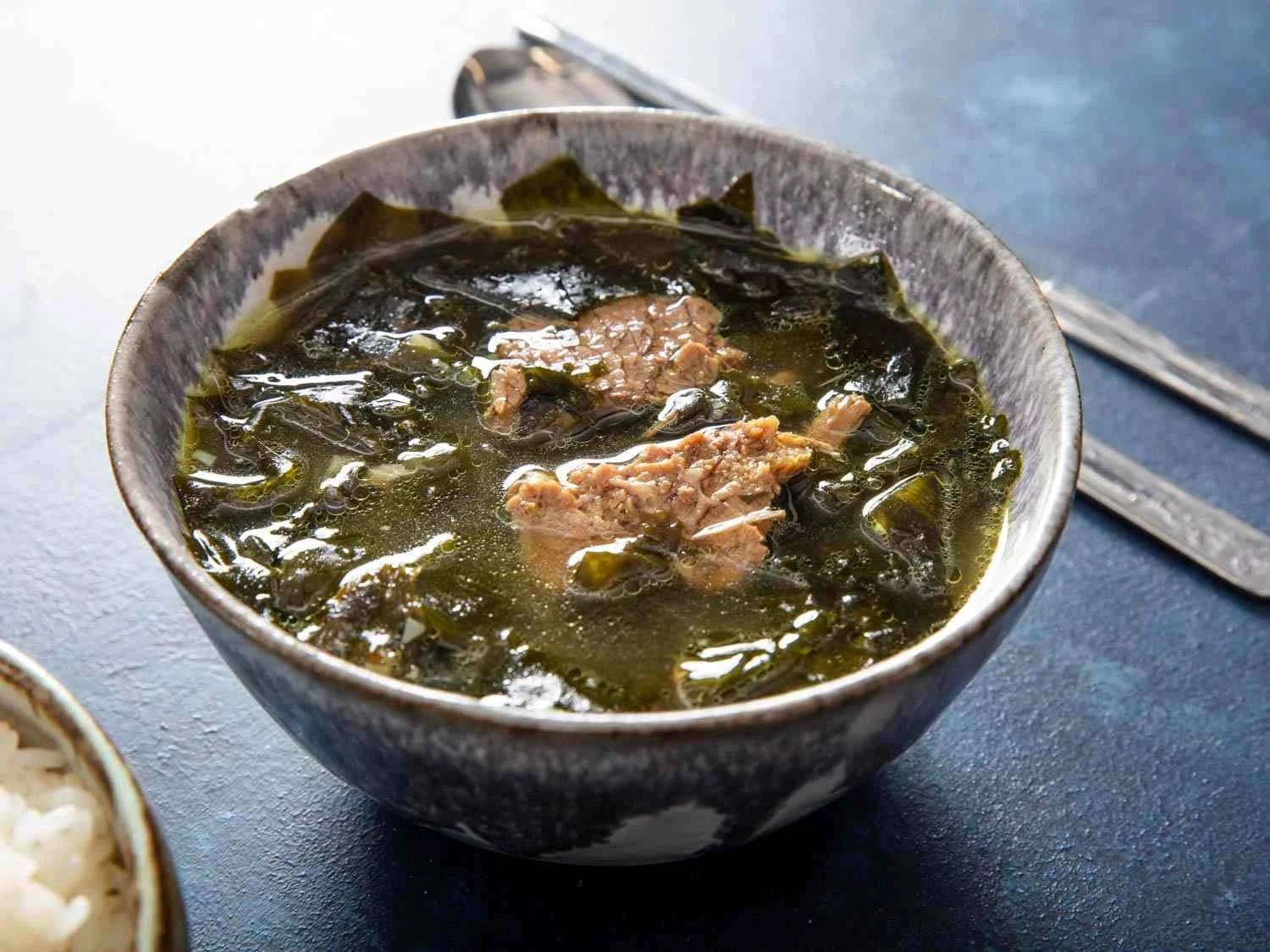
Miyeok-guk (미역국) is a traditional Korean seaweed soup, often eaten on birthdays and after childbirth due to its nutritional benefits.
Preparing Miyeok-guk is a simple labor of love with recipes passed down from each generation. Wild miyeok thrives in the seas around Korea, and is still harvested by the haenyeo, the country’s remarkable matriarchal divers.

What are the pathways to nourishment?
When did you last feel truly nourished?
At the moment, most of us feel depleted as the world around us falls apart and we fight for our survival. The days feel hard, our breath feels strained, and we are steeped in mourning. Nevertheless, we remain tethered and rooted in love. We know that it is love that nourishes us.
Just as a mother passes nourishment to their child, as ancestors have passed it to us, we also must keep nourishment flowing. Our pathways are and have always been food, connection, and community. Our work and the work of our movement is essential, political, and life-sustaining. It is a labor of love. And we need it now more than ever.

Video from KPBS
What does nourishment look like?
The word nourishment comes from the same root as the word “nurse.” The meaning of this root word is to sustain, to support life.
At a basic level, food keeps us alive. Our ability to digest may be one of our least appreciated functions. It is, in fact, a superpower. Digestion is a process of receiving, mixing, breaking down, moving, absorbing, and passing on. Through digestion, we bring our external world into ourselves, rearranging the raw materials, and turning them into something new—the energy required for continuing the work of being alive. We return what we no longer have use for back into the external world. It is evidence of interconnectedness.
We can’t experience nourishment without being open to the world. In many ways, the experience of nourishment is about reciprocity. Nourishing ourselves requires nourishing the world around us. When we nurture our bodies and all our relations, we create the conditions for repair and rejuvenation. We restore our natural flow and revive our life force.
In contrast to separateness and fragmentation, nourishment connects us. It reconciles the relationship between an individual and the collective, the personal and the universal. When we are nourished, we feel love. This embodiment of love transforms us and opens pathways for deep and ancestral healing.
Themes of the Annual Gathering